Thermal & micro-insecticidal bed bug elimination stops severe infestations that chemical sprays alone fail to resolve. In historic homes throughout Boston-Edison, Indian Village, and Palmer Woods, deep lath-and-plaster…
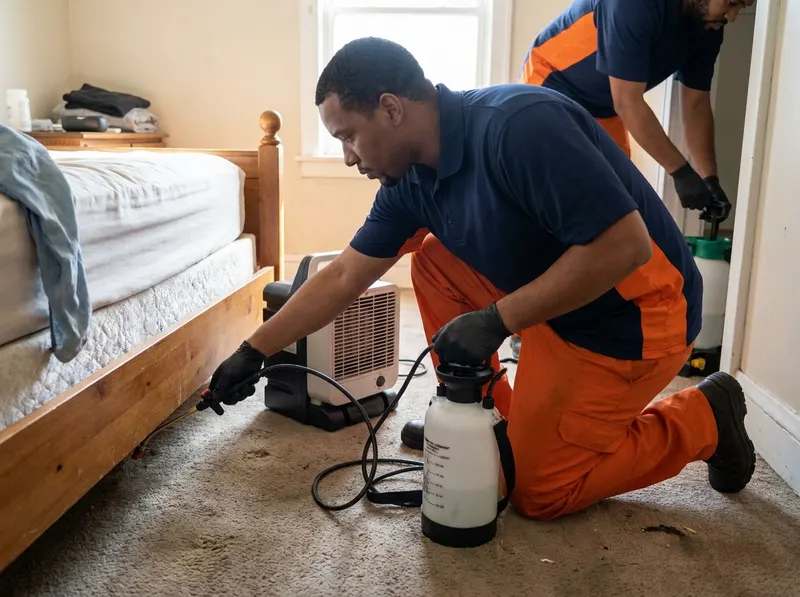
Thermal & micro-insecticidal bed bug elimination stops severe infestations that chemical sprays alone fail to resolve. In historic homes throughout Boston-Edison, Indian Village, and Palmer Woods, deep lath-and-plaster walls, hollow trim mouldings, and thick oak subfloors provide deep travel pathways for bed bugs. While surface sprays cause pests to scatter deeper into contiguous wall voids, thermal remediation forces convective heat into interior framing. Industrial air movers circulate dry heat until core materials sustain 122°F for a minimum of 90 minutes, denaturing insect proteins and neutralizing heat-resistant egg casings without requiring chemical soaking of sleeping surfaces.
Micro-insecticidal dusts and liquid spot barriers act as a defensive perimeter once thermal operations conclude. Structural settling in aged properties across Woodbridge, Corktown, and Midtown creates micro-fissures along brick foundations and shared party walls. Applying synthetic desiccants and micro-encapsulated residuals into service chases, outlet plates, and door frames establishes a persistent barrier. If a stray insect escapes high-temperature thermal pockets, contact with this desiccant fractures its waxy outer cuticle, causing rapid dehydration within 24 to 72 hours. This eliminates the necessity of perpetual monthly chemical spray retainers.
Selecting structural thermal remediation fits heavy infestations where immediate, single-day eradication is required to prevent sleep deprivation and physical bites. For multi-unit walkups or brick duplexes in Bagley and Rosedale Park, chemical-only treatments frequently necessitate three to four spaced appointments, risking re-infestation from adjacent units during the waiting window. The trade-off centers on preparation intensity: occupants must temporarily remove wax, pressurized canisters, sensitive electronics, and vinyl blinds before heat deployment. The operational sequence follows three steps: first, physical placement of high-output commercial thermal ducting; second, real-time wireless temperature monitoring across sub-surface probes; third, micro-insecticidal void sealing to finalize permanent structural clearance.
Every job gets a firm, written price after a free on-site visit.
Tell us about your thermal & micro-insecticidal bed bug elimination job in Detroit and we'll send a clear, written quote, usually the same day.
 Fenvik Pest Response